After a decade of collaboration in the study and documentation of Internet filtering and control mechanisms around the world, the OpenNet Initiative partners will no longer carry out research under the ONI banner. The website, including all reports and data, will be maintained indefinitely to allow continued public access to our entire archive of published work and data.
Research and Data
All three of the OpenNet Initiative's edited volumes—Access Denied, Access Controlled, and Access Contested—are available online.
The OpenNet Initiative's summarized global Internet filtering data is available for download under a Creative Commons license.
Features
-
-
The chairman of Saudi Arabia’s General Commission for Audiovisual Media, Dr. Riyad Najm, said his commission will start putting restrictions on content produced online, including on YouTube.
-
The OpenNet Initiative (ONI) is proud to release new reports on Internet regulation and filtering in five Latin American countries.
Global Internet Filtering
View Country Profiles
View Regional Overviews
Main Filtering Map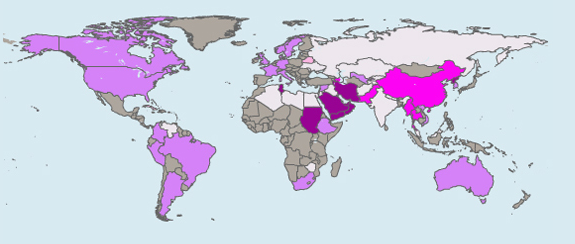 ONI's main filtering map shows the states and regions where each type of filtering ONI studies takes place.
Social Media Map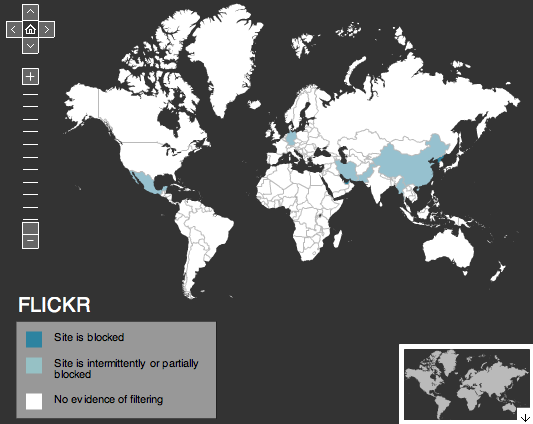 Our social media map serves as an easy visual guide to the states and regions where filtering of five major social media sites occurs.
YouTube Censored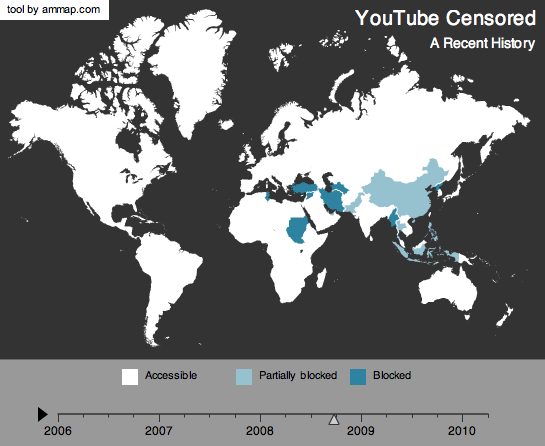 For a detailed look at when and where YouTube has been filtered since 2006, check out YouTube Censored: A Recent History, ONI's interactive global timeline.
Featured Publication
 In In the Name of God, ONI analyzes the Internet censorship policies and practices of majority Muslim countries and finds that in many of these countries online information controls are primarily based on the Islamic faith and interpretations of its instructions.